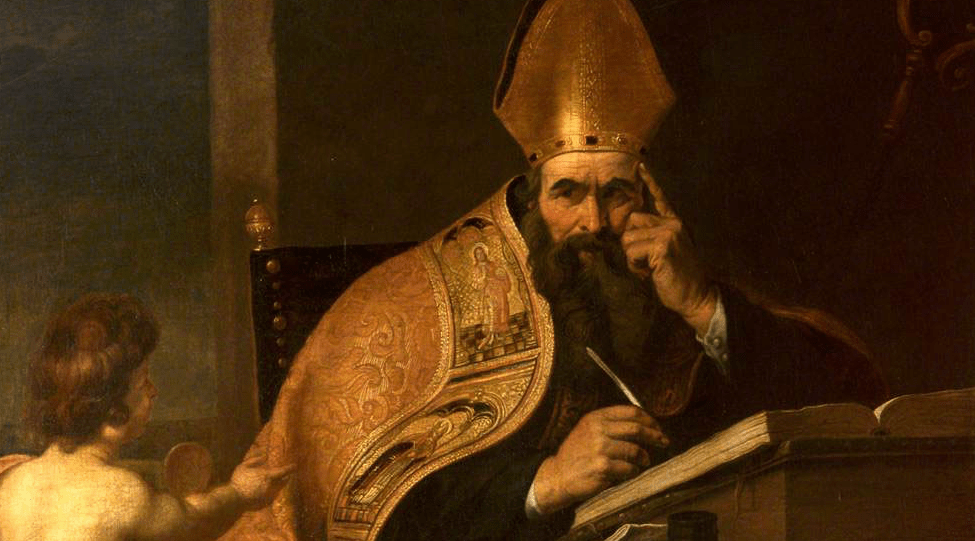
Perhaps the most influential Christian theologian and philosopher of the late Patristic Period is Augustine of Hippo, who authored over one hundred pieces on Christian apologetics, Scriptural exegesis, original sin, philosophy, and his own conversion. His masterpieces, City of God and Confessions, are regarded as two of the most important works in the Western canon of literature. Augustine’s remarkable impact on theology has been embraced by the three major Christian bodies: Roman Catholicism, Eastern Orthodoxy, and Protestantism alike. One theologian said of Augustine’s influence, “His shadow is cast over the development of every major doctrine, including the Trinity, the doctrines of grace, the doctrine of Scripture, and eschatology.”1 Because of his significance, many have believed that all of Augustine’s existing works have already been discovered – until now.
Earlier this year, researchers at the University at Würzburg and the Doberan Abbey, both in Germany, verified two of Augustine’s lost sermons, which were found tucked within the archives of the Pelplin Monastery in Poland. While not the original sermons from the 4th or 5th centuries, these were Medieval Period manuscripts, likely transcribed by monks of the Doberan Abbey around the 12th century. Professor Christian Tornau, a scholar of Augustine of Hippo and professor of philology at Würzburg, spearheaded the project to authenticate the sermons after originally discovered by an independent researcher. The sermons were attributed to Augustine, but as with any claim in a historic document, it needed to be authenticated. Linguistic and theological similarities between these sermons and those officially attributed to Augustine were undeniable.
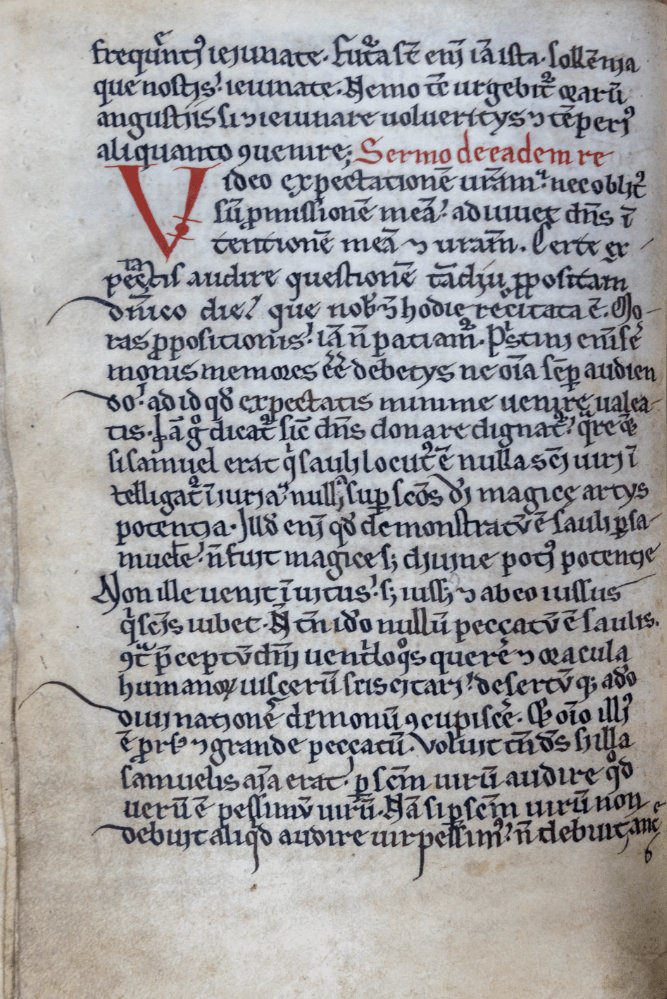
The sermons in question revolved around one of the most heavily-debated stories in the Old Testament. In 1 Samuel 28, as the Israelite army prepared for another war against the Philistines, King Saul went in disguise to the medium of Endor to consult her for wisdom. After asking her to summon the spirit of the late Samuel, Samuel himself appeared to the frightened king. These sermons attempt to answer how a necromancer was able to bring back the spirit of Samuel from the dead. Was Samuel a demonic spirit or did God permit his return to Saul? The answer to these questions was quintessential Augustine.
According to Tornau, “In the new sermons, St. Augustine discusses both possibilities along with their advantages and drawbacks and concludes that both are acceptable because neither contradicts the Christian faith.” He went on to conclude, “This openness to divergent interpretations of Scripture is characteristic of Augustine in general.”2 After two years of work, in the summer of 2026, Tornau and his team officially announced the success of their research: “Our final verdict that they are authentic is the result of continuous philological work during nearly two years.”3
This remarkable discovery will undoubtedly help shape our understanding of Augustine and the progression of Biblical exegesis. Unlike many before him, Augustine believed no one was too far gone for God’s grace and salvation. These sermons highlight this belief. Tornau concluded, “His intellectual independence and his willingness to consider that anyone, even those who seem most wicked, is capable of attaining salvation through the grace of God.”4 As one can easily see, we can still draw Godly wisdom from the timeless words of Augustine.
Sources:
- Stephen J. Nichols, “Augustine of Hippo: A Life,” TableTalk Magazine Online, February 2024, accessed July 30, 2026, https://tabletalkmagazine.com/article/2024/02/augustine-of-hippo-a-life/
- Christian Tornau quoted in, Katarzyna Szalajko, “Hidden for centuries: How newly identified St. Augustine sermons were found,” OSV News, August 4, 2026, https://www.osvnews.com/hidden-for-centuries-how-newly-identified-st-augustine-sermons-were-found/
- Christian Tornau quoted in, Victoria Cardiel, “Newly identified St. Augustine sermons explore troubling Bible passage,” July 30, 2026, EWTN News, https://www.ewtnnews.com/world/europe/two-previously-unknown-sermons-by-st-augustine-on-the-witch-of-endor-discovered
- Ibid.
 Didasko Christianity