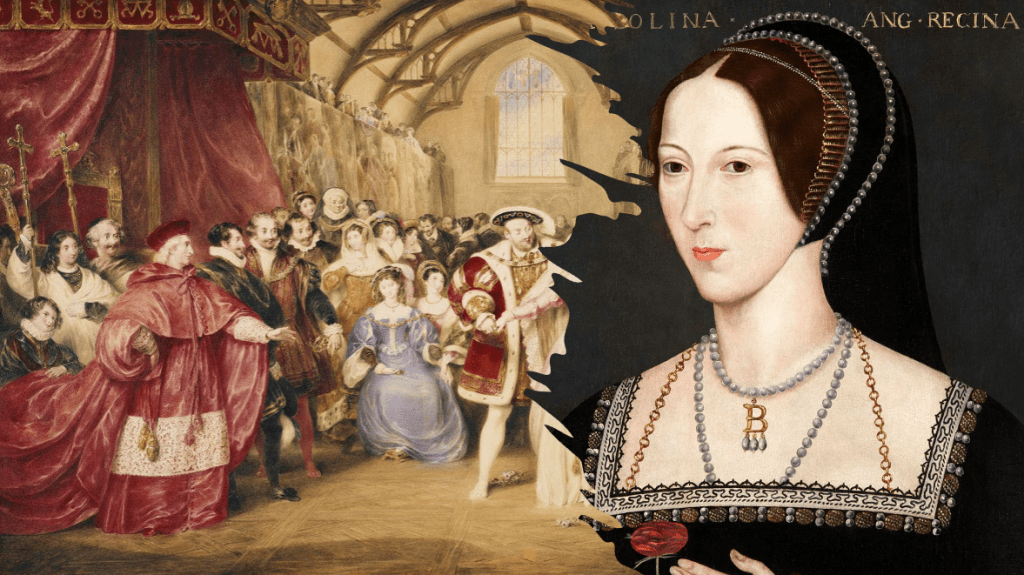
As King Henry VIII’s ill-fated second wife, Anne Boleyn is one of the most misunderstood and complex figures in history. By both her contemporaries and historians, she has been largely remembered for being a manipulator, flirtatious, ruthless, and a victim to Henry’s untamable wrath over a failed effort to produce a male heir. Because of her role in Henry VIII’s marriage crisis and the eventual decision to sever ties with Rome, Anne’s personal convictions have been thoroughly studied. Many have labeled her as an early Reformed Protestant, while others claim she was a fluid Catholic.1 However, it is clear she was a product of the time and environment she lived. While she largely supported the Reformers’ mission to rid the church of corruption, greed, papal supremacy, and concerning extra-Biblical practices, Anne also held onto many traditional Catholic views, including the Marian dogma, transubstantiation, confession, and the veneration of Saints. Faith was at the very center of Anne’s life, paving the way for her to become one of the catalysts of the English Reformation.
Born in the southeast of England at the turn of the 16th century to a noble family, Anne was the daughter of Thomas Boleyn, a member of the Tudor’s royal court, and Elizabeth, the daughter of the Duke of Norfolk. Being a diplomat to the king and a “firm advocate of the New Religion [Evangelicalism],” Thomas used his political influence to smuggle Protestant literature back home, much to his children’s keen interest, including Anne.2 These first books in her possession fostered a lifelong love of reading and learning, especially Scripture and other Christian works. During her teenage years, she spent nearly a decade on the European continent, studying in royal courts of Austria, the Netherlands, and France. While in France, she made acquaintance with fellow women interested in the evangelical movement, including Marguerite d’Angoulême and Renée of France, and studied both Scripture and works of the Reformers. Protestant minister and historian Jean-Henri Merle d’Aubigné wrote about the infuence Marguerite had on Anne Boleyn in his monument work, History of the Reformation in Europe, “Anne Boleyn had not been brought up, as some have said, ‘in the worst school in Europe,’ but in one of the best – in the household of the pious Margeret of Angoulême, who was the enlightened protectress not only of the learned, but of all friends of the Gospel. Anne had learnt from that princess to love the Reformation and the Reformers.”3 It was in France where Anne’s Evangelicalism was born.4
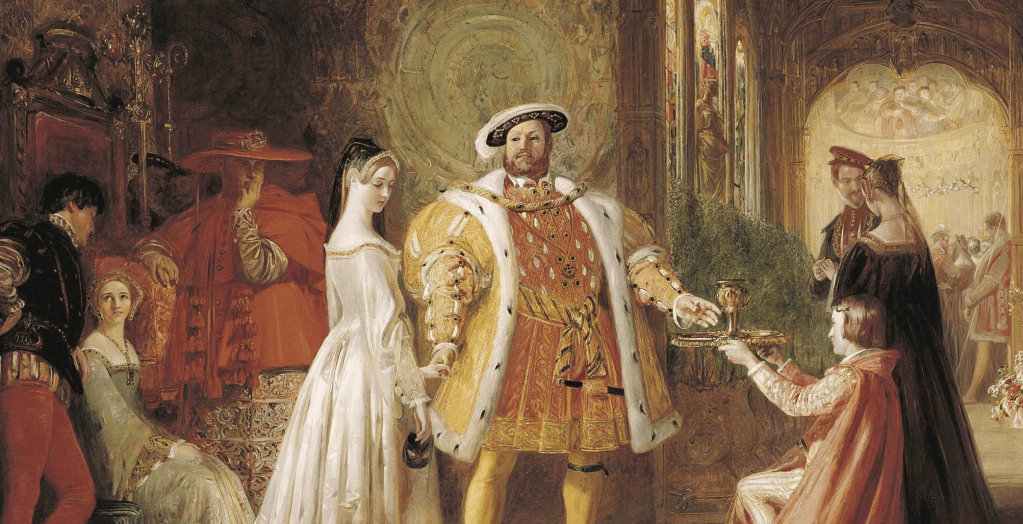
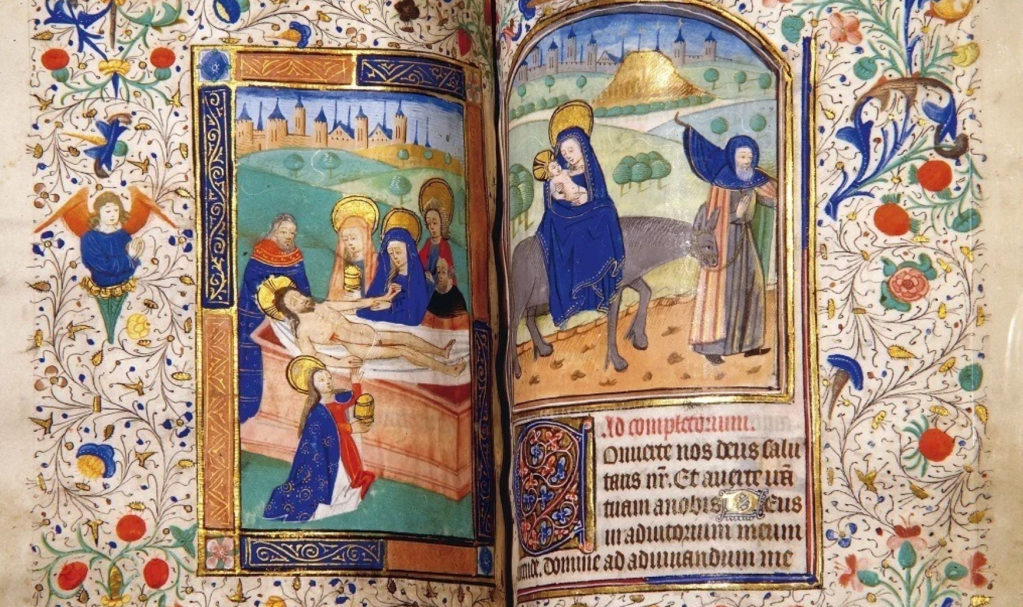
While many European elites pursued Christianity for its convenience over conviction, there is little doubt that Anne’s faith was sincere. In his masterful biography of Anne, The Life and Death of Anne Boleyn, historian Eric Ives argued that, “she was an evangelical by conviction and not just by policy.”5 For example, in her personal copy of the Hever Book of Hours, she wrote the French phrase, “le temps viendra,” meaning “the time will come,” referring to the spread of Reformation ideas. Her younger brother, George, dedicated his transcriptions of Jacques Lefèvre d’Étaples’ translations of the New Testament and Ecclesiastes to Anne. She was also reported to have owned copies of William Tyndale’s English translation of the New Testament.6 Around 1529, as she courted Henry VIII, Anne encouraged him to read Tyndale’s The Obedience of the Christian Man, which argued for man’s obedience to God over all else, especially over the pope. Some have argued that Tyndale’s book helped solidify Henry VIII’s argument to limit papal power over the English Crown and allow for his divorce of Catherine of Aragon. Once she married Henry VIII in 1533, Queen Anne spearheaded efforts to tend to persecuted Protestants, help the needy, support the English translation of Scripture, and pursue Biblical studies. Perhaps no one said it better than d’Aubigné, who wrote, “[Anne] was a virtuous wife, a good protestant, attached to the Bible, opposed to the pope, fond of good works, esteeming men of God more than courtiers.”8
Fast forward to 1536, after giving birth to Elizabeth and then suffering multiple miscarriages, Queen Anne was sentenced to death for high treason, incest, and adultery by King Henry VIII’s royal court. She was purported to have brought one of her personal copies of the Book of Hours to the Tower of London, where she was held prisoner and would later be sentenced to death. According to Edward Hall, just before her beheading at the Tower of London, Anne prayed to her Lord and Savior. “Good Christian people,” she said, “I have not come here to preach a sermon; I have come here to die. For according to the law and by the law I am judged to die, and therefore I will speak nothing against it. I am come hither to accuse no man… I pray God save the King and send him long to reign over you, for a gentler nor a more merciful prince was there never.”9 As she laid her head bare on the scaffold, Anne reflected the words of Christ upon the cross, “To Jesus Christ I commend my soul; Lord Jesus receive my soul.”10 From her early childhood to the moment of death, Anne, a product of the Reformation, exemplified her personal faith in Christ. Though imperfect, especially regarding her romantic relationships, Anne used her platform to glorify God and became a major catalyst for the English Reformation.
Sources:
- Deselms, Alexandra Elise (2014) “A “Princely Lady”: The Religion, Power and Identity of Anne Boleyn,” Ursidae: The Undergraduate Research Journal at the University of Northern Colorado: Vol. 3 : No. 3 , Article 5.
- Claire Ridgway, “Anne Boleyn’s Faith,” The Anne Boleyn Files, April 1, 2010, accessed June 1, 2026, https://www.theanneboleynfiles.com/anne-boleyns-faith/
- Jean-Henri Merle d’Aubigné, History of the Reformation in Europe, Vol. V (New York: Robert Carter & Brothers, 1876), 119.
- Eric Ives, The Life and Death of Anne Boleyn (Oxford, UK: Blackwell Publishing, 2005), 277.
- Ives, The Life and Death, 280.
- Martha Tatarnic, Anne Boleyn: Reputation, Revolution, Religion, and the Queen Who Changed History (New York, NY: Morehouse Publishing, 2026), ebook.
- Ridgway, “Anne Boleyn, William Tyndale, and Henry VIII,” The Anne Boleyn Files, October 2, 2013, accessed June 2, 2026, https://www.theanneboleynfiles.com/anne-boleyn-william-tyndale-henry-viii/
- D’Aubigné, History of the Reformation in Europe, 124.
- Anne Boleyn, quoted in, “What Were Anne Boleyn’s Last Words?” Hever Castle & Gardens, accessed June 3, 2026, https://www.hevercastle.co.uk/news/19th-may-anniversary-of-anne-boleyns-execution/
- Ibid.

