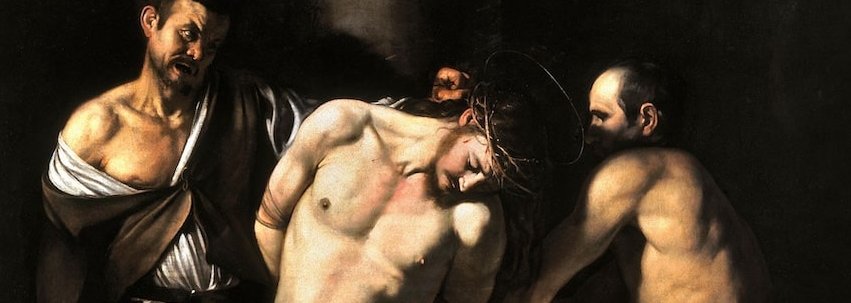
Roughly seven-hundred years before Christ’s birth, Isaiah prophesied the immense suffering the Messiah would have to face in the atonement of our sins, “he was pierced for our transgressions; he was crushed for our iniquities; upon him was the chastisement that brought us peace, and with his wounds we are healed” (Isaiah 53:5). Here, he described the necessary sacrifice of the coming Messiah as humanity’s divine substitute. Around 33 AD, Jesus, the unblemished Lamb of God and perfectly innocent sacrifice, willingly suffered and died – spiritually, emotionally, and physically – for the “sins of the whole world” (1 John 2:2). It was this suffering of Christ that made His death different than the estimated hundreds of thousands of victims of Roman crucifixion. Upon the cross, Christ bore the horrific wounds from flogging, the Crown of Thorns, and the nails through His hands and feet, while facing the full extent of God’s wrath. Throughout both the Old and New Testaments, God reveals the purpose and significance of Christ’s suffering – and, ultimately, requires a response from all of humanity.
The four Gospel accounts are our primary source materials for understanding the suffering Jesus went through during the “passion,” however, we have also learned a tremendous amount about Roman crucifixion from additional primary sources from outside the Christian tradition. According to Seneca, “Would any human being willingly choose to be fastened to that cursed tree, especially after the beating that left him deathly weak, deformed, swelling with vicious welts on shoulders and chest, and struggling to draw every last, agonizing breath? Anyone facing such a death would plead to die rather than mount the cross.”1 Because of its severity and utter brutality, crucifixion as an execution method was only reserved for non-citizens of the empire.
As we see in the Gospels, victims of crucifixion were first stripped and scourged, or viciously whipped, by a cat-of-nine-tails. The scourging, carried out by Roman legions, was so severe that many victims died of blood loss before they were lifted upon the cross. After scourging, they were paraded completely naked in public, having to carry the patibulum (cross-beam) to the execution site. Commonly, crucifixions were performed just outside the city walls, sending a clear message that disorder or treason was punishable by death via crucifixion. In fact, “the crucifixion of Jesus indicates that, in Roman eyes, he was a traitor,” concludes historian Dr. Rebecca Denova. The precise method of affixing the victim to the cross varied. Some, like Jesus, were nailed in the wrists and feet, while others were tied with rope. Undoubtedly, Rome intended her victims to suffer as long as possible. Upon the cross, victims typically succumbed within hours to a few days. Between the three victims at Golgotha, Jesus was the first to die; the two others had their own legs shattered to speed up the process. After death, most crucified victims were left to rot and their remains thrown into ditches or bodies of water, thus, according to the Roman imperial cult, eternally trapping their soul in Hades.2 The Romans wanted their victims to suffer in this life and the next. The famed Roman consul and orator Cicero was so sickened by crucifixion that he wrote, “Let the very name of the cross be far away not only from the body of a Roman citizen, but even from his thoughts, his eyes, his ears!”3 We cannot fathom the physical pain Jesus went through.
In addition to the physical and emotional suffering upon the cross, Jesus faced the spiritual suffering for all of humanity. This is unlike any pain a victim of crucifixion faced. Bearing the wrath of God upon His body (Isaiah 53:5), Christ became our substitute for the punishment we deserve when we rebel against God through sin. “God made him who had no sin to be sin for us,” wrote Paul in his Second Letter to the Corinthians, “so that in him we might become the righteousness of God” (2 Corinthians 5:21). Jesus became “the propitiation for our sins, and not for ours only but also for the sins of the whole world” (1 John 2:2). Paul expanded on this in Galatians: “Christ redeemed us from the curse of the law by becoming a curse for us” (Galatians 3:13). By Christ bearing our sins upon His own body, “we shall be saved from wrath through Him” (Romans 5:9). Jesus’ suffering was perhaps best summarized when He cried out, “My God, My God, why have You forsaken Me?,” a direct quote from Psalm 22:1 (Mark 15:34). He was not doubting the Father’s presence or separating Himself from the Father, instead, He felt the utter pain from the separation from God we face when we sin. The rest of Psalm 22:1 clarifies Jesus’ suffering upon the cross: “Why are You so far from helping Me, and from the words of My groaning?” (Psalm 22:1). As sinners, we have all faced that feeling of separation from God, even though He remains with us always.
Physical Suffering
| “As many were astonished at you— his appearance was so marred, beyond human semblance, and his form beyond that of the children of mankind—” | Isaiah 52:14 |
| “He was oppressed, and he was afflicted, yet he opened not his mouth; like a lamb that is led to the slaughter, and like a sheep that before its shearers is silent, so he opened not his mouth.” | Isaiah 53:7 |
| “I am poured out like water, and all my bones are out of joint. My heart has turned to wax; it has melted within me. My strength is dried up like a potsherd, and My tongue clings to My jaws; You have brought Me to the dust of death. For dogs have surrounded Me; the congregation of the wicked has enclosed Me. They pierced My hands and My feet; I can count all My bones. They look and stare at Me. They divide My garments among them, and for My clothing they cast lots. But You, O LORD, do not be far from Me; O My Strength, hasten to help Me! Deliver Me from the sword, My precious life from the power of the dog. Save Me from the lion’s mouth and from the horns of the wild oxen! You have answered Me.” | Psalm 22:14-21 |
| “And the Son of Man will be delivered over to the chief priests and scribes, and they will condemn him to death and deliver him over to the Gentiles to be mocked and flogged and crucified, and he will be raised on the third day.” | Matthew 20:18-19 |
| “You know that after two days the Passover is coming, and the Son of Man will be delivered up to be crucified.” | Matthew 26:2 |
| “Then he released for them Barabbas, and having scourged Jesus, delivered him to be crucified.” | Matthew 27:26 |
| “And some began to spit on him and to cover his face and to strike him… And the guards received him with blows.” | Mark 14:65 |
| “And they were striking his head with a reed.” | Mark 15:18 |
| “Then Pilate took Jesus and flogged him.” | John 19:1 |
| “Therefore Christ suffered in the flesh” | 1 Peter 4:1 |
Spiritual Suffering
| “The Lord laid on him the iniquity of us all.” | Isaiah 53:6 |
| “You have borne the grief of our sins.” | Matthew 26:28 |
| “Then he said to them, ‘My soul is overwhelmed with sorrow to the point of death. Stay here and keep watch with me.’ | Matthew 26:38 |
| “And about the ninth hour Jesus cried out with a loud voice, saying, “Eli, Eli, lema sabachthani?” that is, “My God, my God, why have you forsaken me?”” | Matthew 27:46 |
| “Being in anguish, he prayed more earnestly, and his sweat was like drops of blood falling to the ground.” | Luke 22:44 |
| “He himself bore our sins in his body on the tree, that we might die to sin and live to righteousness. By his wounds you have been healed.” | 1 Peter 2:24 |
Emotional Suffering
| “He was despised and rejected by men, a man of sorrows and acquainted with grief; and as one from whom men hide their faces he was despised, and we esteemed him not.” | Isaiah 53:3 |
| “Surely he has borne our griefs and carried our sorrows; yet we esteemed him stricken, smitten by God, and afflicted.” | Isaiah 53:4 |
| “And they stripped him and put a scarlet robe on him, and twisting together a crown of thorns, they put it on his head and put a reed in his right hand. And kneeling before him, they mocked him, saying, “Hail, King of the Jews!” | Matthew 27:28-29 |
| “And they were… spitting on him and kneeling down in homage to him. And when they had mocked him, they stripped him of the purple cloak and put his own clothes on him.” | Mark 15:19-20 |
| “So also the chief priests with the scribes mocked him to one another, saying, “He saved others; he cannot save himself.” | Mark 15:31 |
Atonement for Sin
| “He was pierced for our transgressions; he was crushed for our iniquities; upon him was the chastisement that brought us peace, and with his wounds we are healed” | Isaiah 53:5 |
| “And I will pour out on the house of David and the inhabitants of Jerusalem a spirit of grace and supplication. They will look on me, the one they have pierced, and they will mourn for him as one mourns for an only child.” | Zechariah 12:10 |
| “For the wages of sin is death, but the gift of God is eternal life in Christ Jesus our Lord.” | Romans 6:23 |
| “For God has done what the law, weakened by the flesh, could not do. By sending his own Son in the likeness of sinful flesh and for sin, he condemned sin in the flesh” | Romans 8:3 |
| “God made him who had no sin to be sin for us, so that in him we might become the righteousness of God.” | 2 Corinthians 5:21 |
| “You were redeemed from the empty way of life handed down to you from your ancestors, not with perishable things such as silver or gold, but with the precious blood of Christ, a lamb without blemish or defect.” | 1 Peter 1:18-19 |
| “For Christ also suffered once for sins, the righteous for the unrighteous, that he might bring us to God, being put to death in the flesh but made alive in the spirit” | 1 Peter 3:18 |
| “He is the propitiation for our sins, and not for ours only but also for the sins of the whole world.” | 1 John 2:2 |
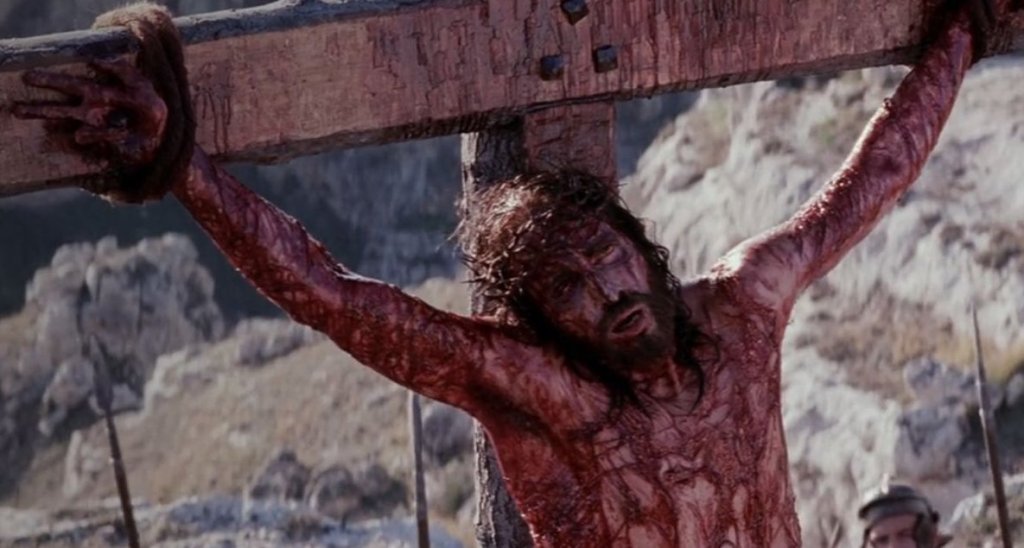
The Apostle Paul perhaps summarized Christ’s suffering best in his Epistle to the Romans: “For if we have been united with him in a death like his, we shall certainly be united with him in a resurrection like his” (Romans 6:5). As we see through Scripture, the suffering and death of Christ was only temporary; ultimately, it was His death that led to the resurrection and the promise of our eternal union with Him in paradise. Therefore, we can hold on to the “living hope through the resurrection of Christ from the dead” (1 Peter 1:3). Christ’s death and resurrection requires a response from each person – do we believe in what He did for us? Paul summarized the magnitude of this response: “For since we believe that Jesus died and rose again, even so, through Jesus, God will bring with him those who have fallen asleep” (1 Thessalonians 4:14). We can have hope in that through His suffering, death, and resurrection, Christ defeated the grave and “with his wounds, we are healed” (Isaiah 53:5).
Sources
- Seneca quoted in Stephen M. Miller, “What Romans Said About Crucifixion,” Stephen M. Miller Blog, accessed April 19, 2026, https://stephenmillerbooks.com/what-romans-said-about-crucifixion/
- Rebecca Denova, “Crucifixion,” World History Encyclopedia, May 12, 2022, accessed April 15, 2026, https://www.worldhistory.org/crucifixion/.
- Cicero quoted in Murray Adamthwaite, “The Cross: Execution by Torture, Barbaric, Brutal, Humiliating – and for Us,” Christian Library, accessed April 19, 2026, https://www.christianstudylibrary.org/article/cross-execution-torture

