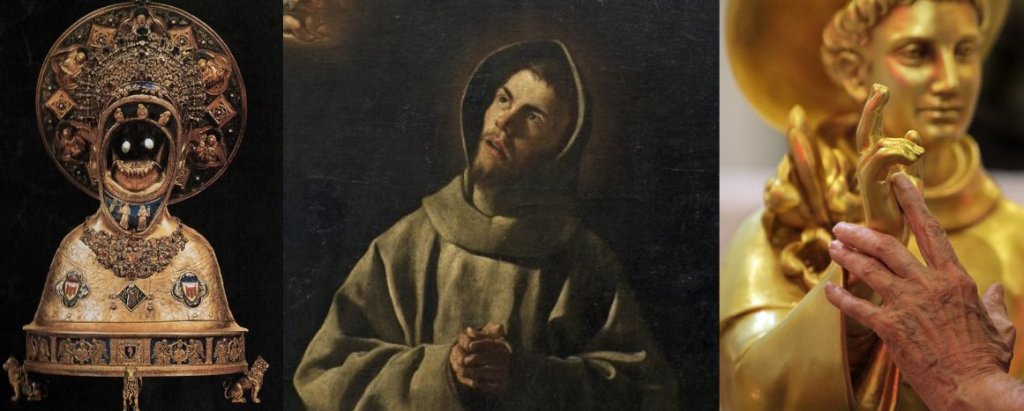
On August 9, 2026, the clergy and laypeople of the Metropolitan Cathedral of Saint Agatha honored the anniversary of the return of St. Agatha of Sicily’s relics in an elaborate ceremony. Nine-hundred years ago, the relics of St. Agatha, including her skull, were finally returned to Sicily from Constantinople. To honor the momentous anniversary, the Catania Cathedral held an elaborate ceremony, where Cardinal Parolin from the Vatican performed the crowning of her skull. In a viral video, Cardinal Parolin can be seen lifting high the skull and then kissing it, as the congregation sang. For many Christians, the ritual of venerating the relic was seen as “pagan” or too-closely resembling necromancy, a practice strictly forbidden in Mosaic Law. The Roman Catholic Church, however, refuted those claims, saying relic veneration was about honoring the faithful and connecting with God through a holy relic. While we can certainly debate the appropriateness of such practices, we will instead look at the many other first-class relics of highly-revered saints within Roman Catholicism. This is not to condone the practice of saint veneration, but to study the countless examples of saint relics that have been preserved over the past two-thousand years.
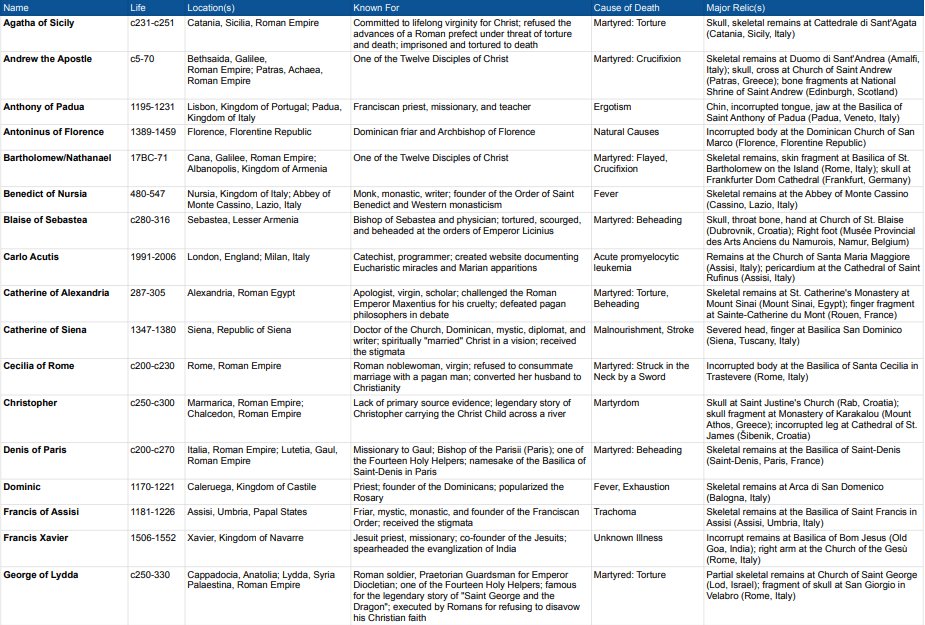
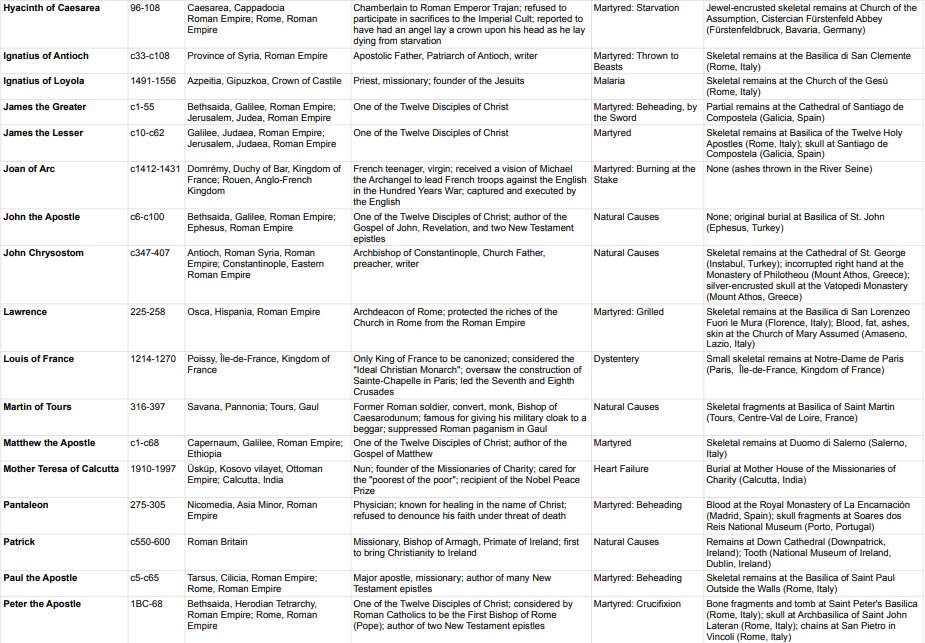
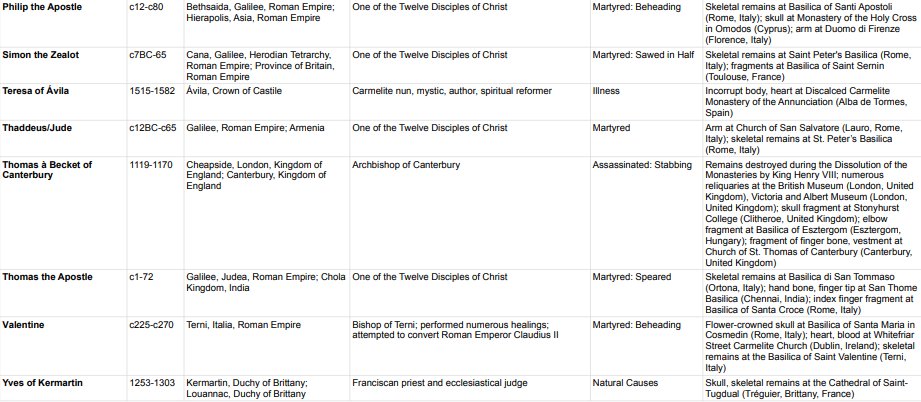
Below, you will find a list of major Roman Catholic saints and their first-class relics that have been preserved across the world, primarily in the West. A first-class relic are the human remains of that particular person. Over the course of Church history, the remains of saints were rarely kept complete; instead, fragments of their bodies (bones, organs, etc.) were distributed to various Catholic cathedrals or monasteries for pilgrimages. As you can see in the list, there are plenty of odd, or disturbing, examples of relics. While these can fuel claims of necromancy, many faithful Catholics believe relic veneration honors God by paying homage to His saints.
 Didasko Christianity