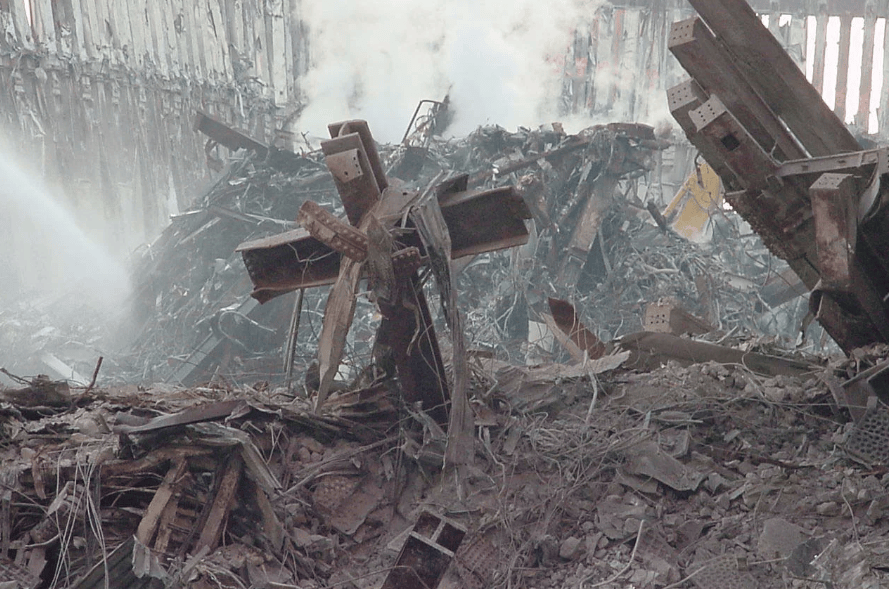
On September 13, 2001, amidst the massive post-9/11 rescue and clean-up operations at Ground Zero, a construction volunteer made an incredible discovery. Made of the steel cross beams from the World Trade Center’s North Tower was a 20-foot cross that arose out of the debris. It quickly became a symbol of hope and faith in the recovery. Crews at Ground Zero made it into a shrine, holding Mass, services, and prayers before it. The volunteer who found the cross, Frank Silecchia, recalled the hope the cross, “I saw Calvary in the midst of all the wreckage, the disaster. It was a sign… that God didn’t desert us.”1 Like New York in the aftermath of 9/11, the Christian cross standing tall atop destruction and death throughout history has represented the hope of the Resurrection – that Christ defeated death and from His death and Resurrection, we have the hope that death is only temporary for the believer. In the Gospel of John, just before raising Lazarus from the dead, Jesus gave comfort to Lazarus’ sister, “I am the resurrection and the life. Whoever believes in me, though he die, yet shall he live, and everyone who lives and believes in me shall never die” (John 11:25-26, ESV). Death is only the beginning of eternal life with our Lord, Jesus Christ.
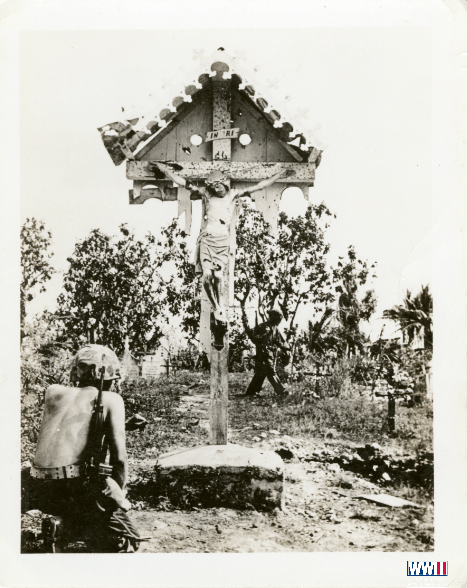
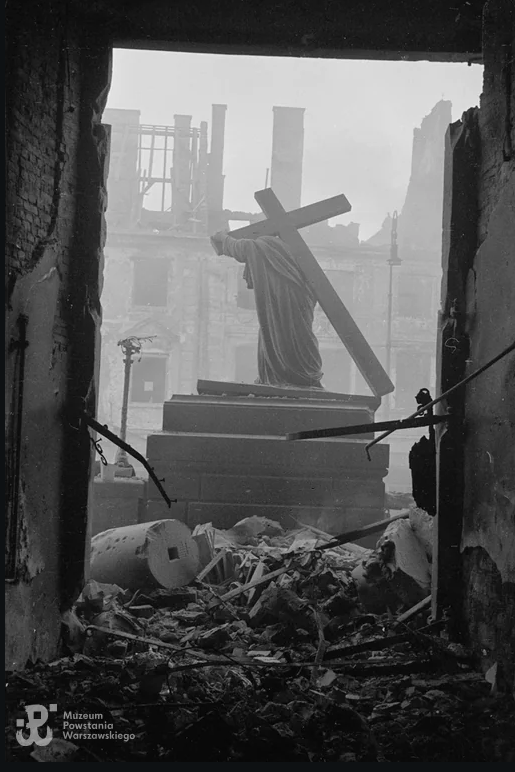
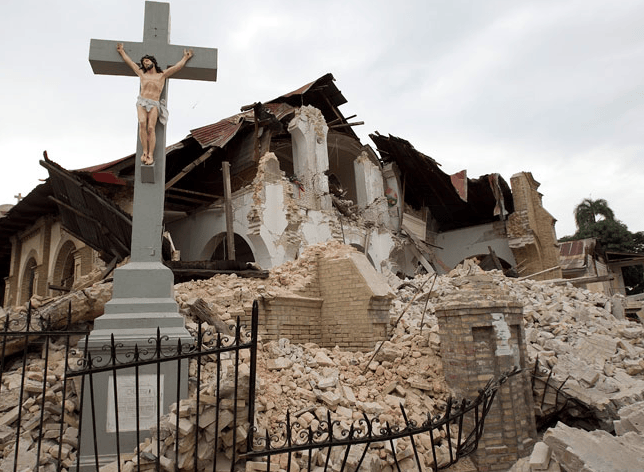
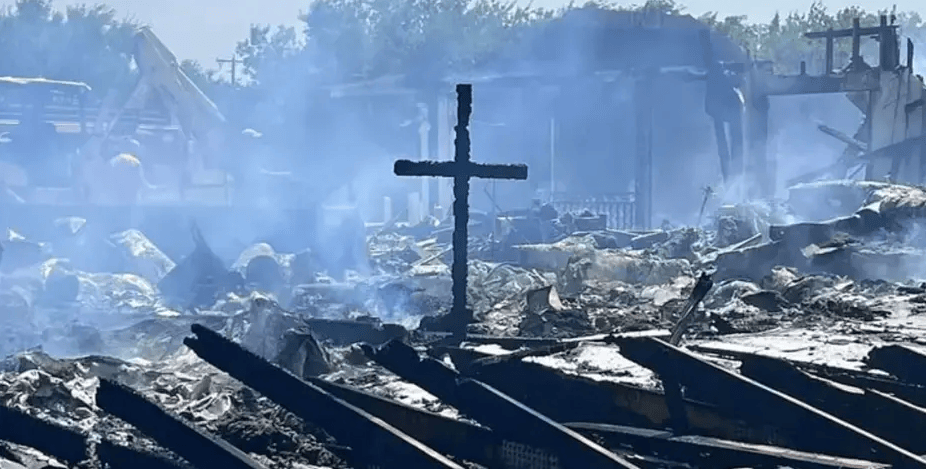
The compilation of images you see below demonstrate the power of the cross in times of destruction and death. For soldiers, survivors, and first responders, the Christian cross embodies strength over death, sacrifice, hope, and life everlasting. To see the cross upright on a battlefield or debris field is a poignant reminder of these things. British poet Wilfred Owen wrote an emotional poem about the power of “Crucifix Corner” Cemetery near the Somme in France, “Once ever hangs where shelled roads part. In this war He too lost a limb, But His disciples hide apart; And now the Soldiers bear with Him.”2 From earthquakes to war, the standing cross is a powerful testament to Christ’s defeat over death through His Resurrection and the promises He made that, “death shall be no more” (Revelation 21:4, ESV).
Crucifix Possibly from the Basilica of Saint-Quentin (Saint-Quentin, Aisne, France), 1914.
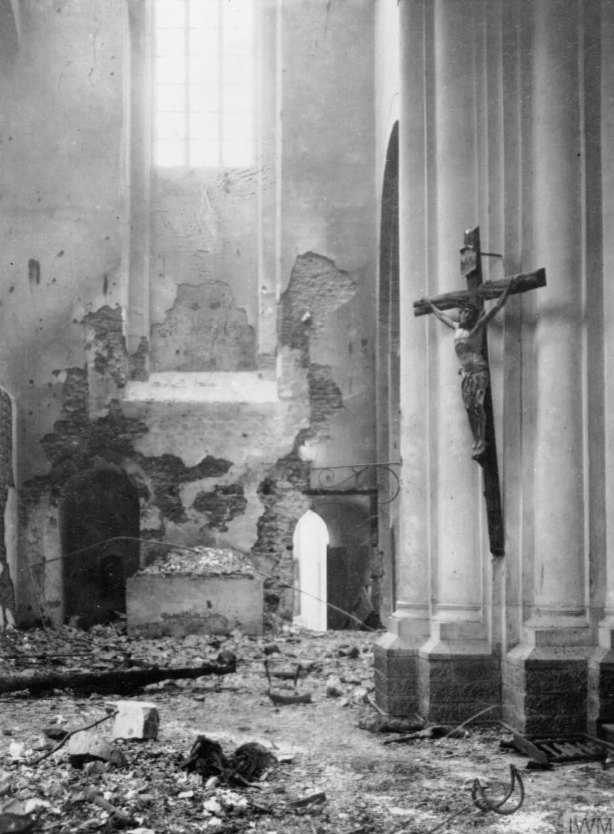
Crucifix at “Crucifix Corner” Cemetery (River Ancre (tributary of the River Somme), France), c. 1916
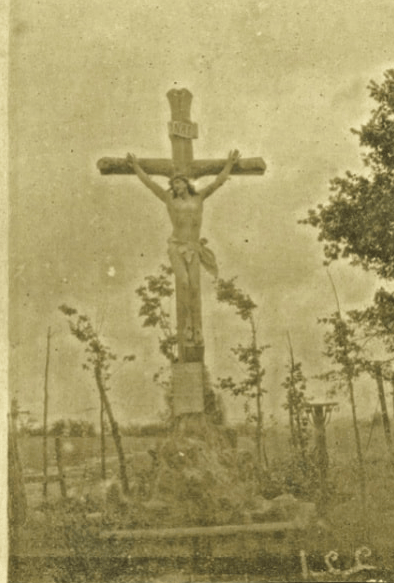
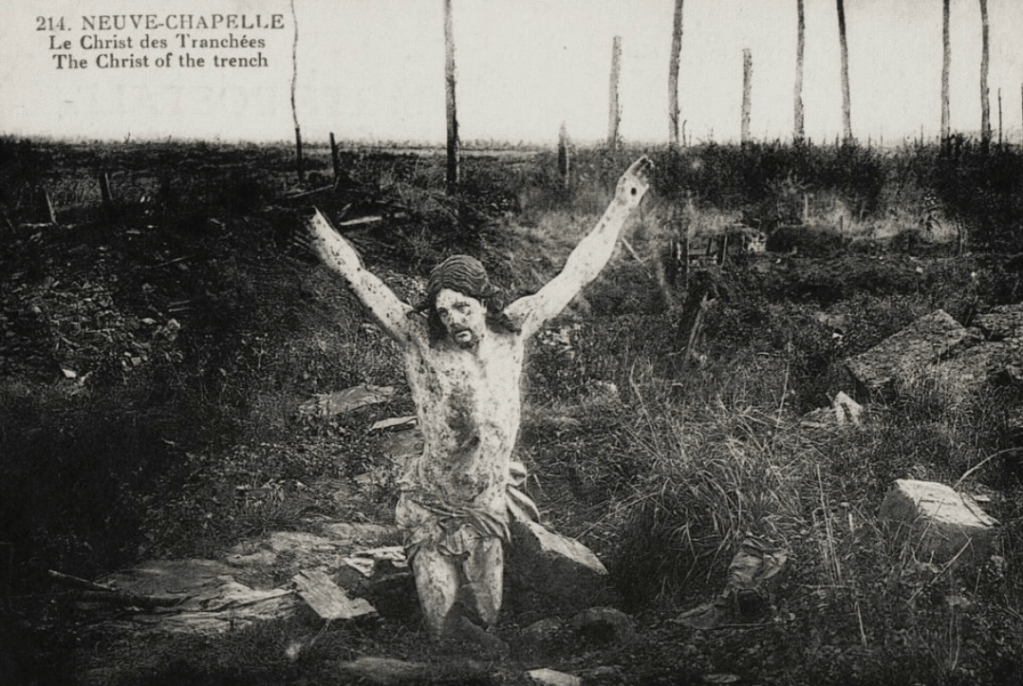
“The Christ of the Trench” at Neuve-Chapelle (Neuve-Chapelle, France), 1918
U.S. Marines Kneel Before a Damaged Crucifix (Mariana Islands), c. 1943
Statue of Jesus Carrying the Cross Among the Ruins of the Church of the Holy Cross (Warsaw, Poland), 1944.
A Crucifix from Sacred Heart Catholic Church Survives Amongst the Rubble of the Haiti Earthquake (Port-au-Prince, Haiti), 2010.
The Charred Cross of Balsora Baptist Church Survives a Destructive Fire (Bridgeport, Texas), 2026
Sources:
- Frank Silecchia quoted in, Colleen Long, “WTC Cross Moves to 9/11 Museum,” NBC New York, July 23, 2011, accessed September 11, 2026, https://www.nbcnewyork.com/news/local/wtc-cross/1924141/
- Wilfred Owen, “At a Calvary Near the Ancre,” Poetry Atlas, accessed September 12, 2026, http://www.poetryatlas.com/poetry/poem/408/at-a-calvary-near-the-ancre.html
 Didasko Christianity